Blue Origin Expands at Cape Canaveral: What It Means for Low Earth Orbit
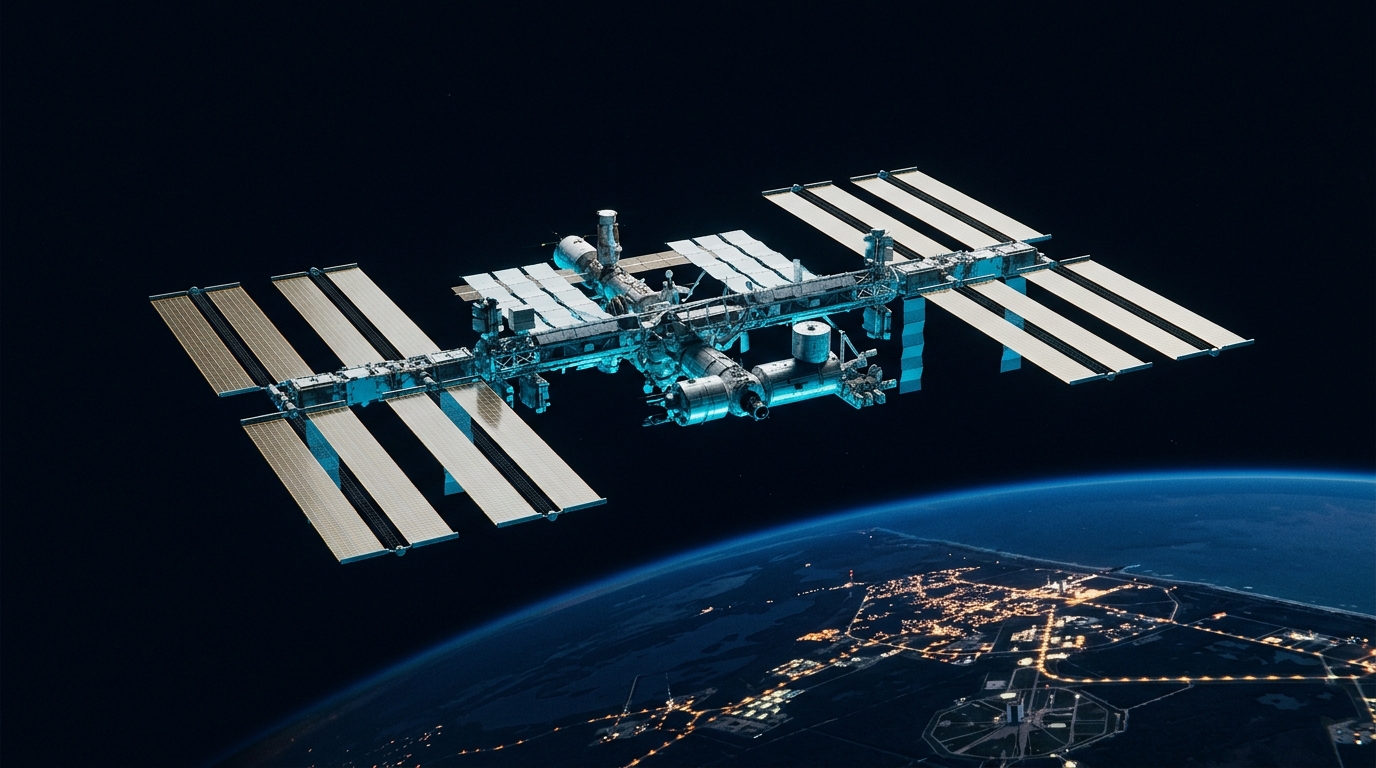
Each time you look up to watch the silent pass of the International Space Station, you are looking at the culmination of a titanic terrestrial logistics effort that begins on very specific launch pads. The news that Blue Origin is rapidly expanding its physical footprint in Florida is more than just construction and concrete: it marks the acceleration of a new era of heavy-lift launch vehicles that will coexist with the orbital complex and transform what we see flying overhead.
For those of us tracking daily life in orbit, understanding the infrastructure rising at Cape Canaveral is key to understanding how future crewed outposts will be sustained once the current station reaches the end of its operational life.
What Happened
Space company Blue Origin has launched an ambitious expansion of its testing and launch facilities across Kennedy Space Center and Cape Canaveral Space Force Station, according to a report by NASASpaceflight. The company founded by Jeff Bezos is carrying out a coordinated expansion across multiple key sites: from New Glenn rocket integration areas to static test stands and ground support complexes designed to handle a much more demanding operational tempo than originally planned.
This physical infrastructure build-out also coincides with major commercial milestones. Alongside the ongoing work in Florida, Blue Origin was recently awarded a NASA contract to design and launch the Mars Telecommunications Orbiter before the end of 2028, as reported by Space Scout. Meanwhile, the global commercial and institutional launch manifest continues to accelerate, highlighted by European scientific missions like ESA’s FLEX and Sentinel-3C satellites preparing for orbit.
The Cape Canaveral deployment spans stage processing hangars, cryogenic infrastructure, auxiliary pads, and logistics zones capable of sustaining regular launches. After years of closed-door development, Blue Origin's visible footprint on the US East Coast shows that the New Glenn rocket is entering its operational phase, aiming for immediate contention in access to low Earth orbit and beyond.
Why It Matters
For over two decades, routine crew and cargo access to the International Space Station has relied on a very small handful of vehicles and launch pads. Today, missions sustaining the orbital laboratory are managed by established operators such as SpaceX and Roscosmos. The definitive arrival of a third heavy-lift player in Florida fundamentally reshapes space logistics dynamics.
First, the infrastructure Blue Origin is consolidating at Cape Canaveral is conceived on a scale far exceeding traditional programs. The New Glenn launch vehicle, featuring a seven-meter fairing diameter, is designed not only to deploy telecommunications satellites or planetary missions, but also to loft entire modules for next-generation commercial space stations like Orbital Reef. For skywatchers, this means the ISS's visual monopoly as the sole large crewed complex will begin to diversify before the decade is out.
Second, competition for launch resources in Florida ensures redundancy. When a pad suffers a technical delay or unexpected anomaly, the orbital supply chain feels the strain. Having multiple operators with independent facilities ensures that astronaut rotations, critical science deliveries, and maintenance operations continue uninterrupted.
Furthermore, deep-space exploration awards—such as the newly granted Mars orbiter contract from NASA—demonstrate that the architecture taking shape on the coast today will serve as a bridge between low Earth orbit and interplanetary destinations. Cape Canaveral is shifting from a site of sporadic test flights into an enduring logistical hub, akin to the world's busiest maritime ports.
Our Take
While heavy machinery reshapes the Florida landscape to build the medium-term future, the reality of the spaceflight present glides overhead with clockwork precision. According to real-time data from our tracker, the International Space Station is currently flying at an altitude of 440 km, cruising at a blistering speed of 27,526 km/h. An international crew works inside, rotating every few months; you can see who is currently on board in our section on the ISS crew.
It is easy to get caught up in news of future construction, multi-year contracts, and corporate promises that take years to materialize. Yet the contrast between the construction dust at Cape Canaveral and the quiet serenity of the ISS in orbit offers a core lesson in astronomy outreach: the technology that enables humanity to live in the vacuum of space demands years of patient ground work before becoming a brilliant point of light in the night sky.
For skywatchers checking whether they can spot a pass over their city tonight, Blue Origin's expansion will not alter the station's path in the coming days. The ISS will keep crossing the sky with the unmistakable brightness cast by its massive solar arrays spanning more than seventy meters. If you want to check when its next visible pass will occur from your window, take a look at the station pass times so you don't miss the opportunity.
Within a few short years, however, spacecraft lifting off from these very same expanded pads in Florida will carry the replacements for the modules where the current ISS crew lives today. Watching the station tonight using our guide to spotting the ISS in the sky is more than just admiring a once-in-a-generation scientific achievement: it is witnessing the final golden era of a laboratory that will soon share the night sky with new commercial outposts powered by the work breaking ground today.
Space exploration advances on the ground so that we can keep looking up in wonder. We invite you to check our real-time tracker and find out exactly where over Earth the station is flying this very second.
Source: NASASpaceflight ↗