How to Read an ISS Pass: Magnitude, Elevation, Azimuth, and Duration
Any International Space Station pass prediction gives you the exact same columns: time, magnitude, maximum elevation, and entry and exit azimuth. If you don't know how to read them, the table won't tell you if it's worth heading outside. If you do, it takes ten seconds to decide whether tonight's pass is worth your time.
Magnitude: How Bright It Will Be
Magnitude is the scale astronomers use to measure brightness, and it has a catch: it works backwards from what you might expect. The lower the number, the brighter the object. It is also a logarithmic scale, meaning each step represents a jump of about 2.5 times in brightness.
To give you some reference points you can check tonight: Polaris (the North Star) sits at magnitude 2, the dimmest stars visible to the naked eye from a city are around magnitude 3, Sirius (the brightest star in the night sky) is -1.5, and Venus reaches -4.
During a high, well-lit pass, the ISS reaches magnitudes between -3 and -4. In other words, it rivals Venus and easily outshines every star in the sky. That is why you can see it effortlessly even from a city center. During low or poorly lit passes, it might only reach magnitude 0 or 1—still visible, but far less spectacular.
Rule of thumb: below -2, excellent pass. Between -1 and -2, very good. Above 1, only if you have dark skies and feel like a challenge.
Elevation: The Number Most People Overlook
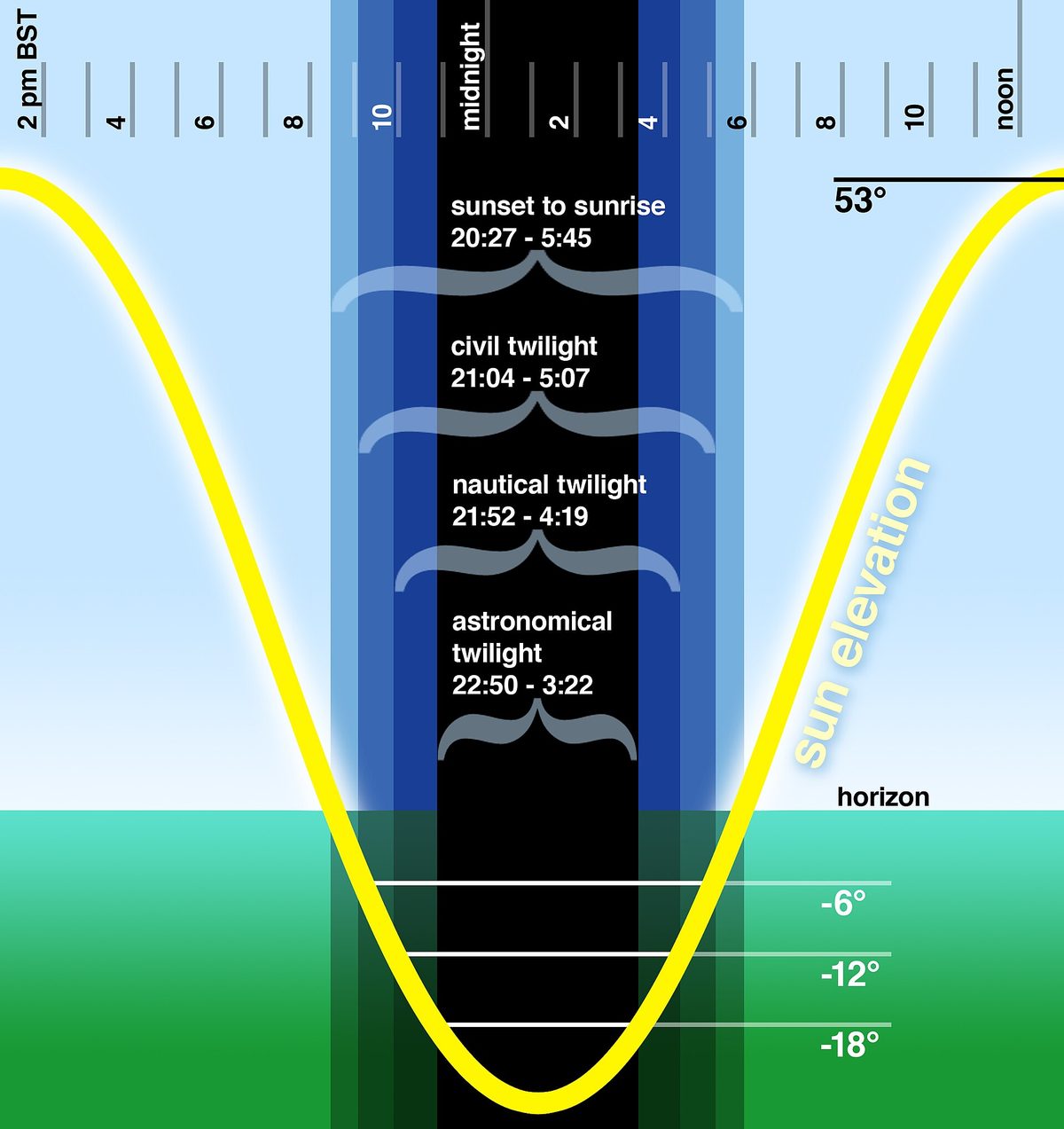
Elevation (or altitude) measures in degrees how high an object rises above your horizon. Zero degrees is the true horizon; ninety degrees is directly overhead, the zenith.
To estimate it without instruments, there is a trick that works surprisingly well: hold your fist at arm's length—it spans roughly 10 degrees of sky. Four fists stacked upward from the horizon equal 40 degrees.
In practice, maximum elevation is the single factor that decides whether you will actually see the ISS:
- Above 60 degrees: superb pass, flying almost directly overhead. Impossible to miss.
- Between 30 and 60 degrees: very good pass, easy to spot from almost anywhere.
- Between 10 and 30 degrees: visible, but you need an unobstructed horizon in that direction. Tough from a street lined with buildings.
- Below 10 degrees: in an urban area, don't bother.
Elevation also affects brightness, which is why the two numbers go hand in hand: the lower the ISS is, the more atmosphere its light must penetrate, dimming its glow.
Azimuth: Which Way to Look
Azimuth is the direction along the horizon, measured in degrees starting from true north and heading clockwise toward the east. That means 0 degrees is north, 90 is east, 180 is south, and 270 is west. An azimuth of 225 degrees corresponds to southwest.
Pass predictions usually provide two azimuths: appearance and disappearance. The ISS orbits from west to east, so it will almost always emerge somewhere in the western sky and head toward the east. What changes between passes is whether it crosses to the north or south, dictating which part of your sky needs to be clear.
A tip to avoid frustration: locate west before the pass starts using your phone's compass, and stand where that side is free of buildings. Trying to figure out where to look once the station is already crossing is the easiest way to miss it.
Duration: What Those Minutes Mean
A full pass lasts between three and six minutes, and duration correlates directly with elevation: high-crossing passes last longer because they track across more visible sky. Low, two-minute skimming passes are usually the dimmest as well.
Also keep in mind that the listed duration is theoretical: passes often cut short because the ISS slips into Earth's shadow mid-transit. That isn't a prediction error.
How to Turn This Into a Decision
When you check your schedule on the pass predictor, use this quick filter: maximum elevation above 30 degrees and magnitude below -1. If a pass meets both criteria, go outside. If not, wait for the next one—you rarely have to wait more than a day or two.
If you want to see where those numbers come from, the live tracker displays the station's real-time position and flight path: watching its trajectory on the map makes those table columns much more concrete. For practical viewing advice, check out the complete guide.
Read these four numbers correctly, and you will never head outside again for a pass you were never going to see.
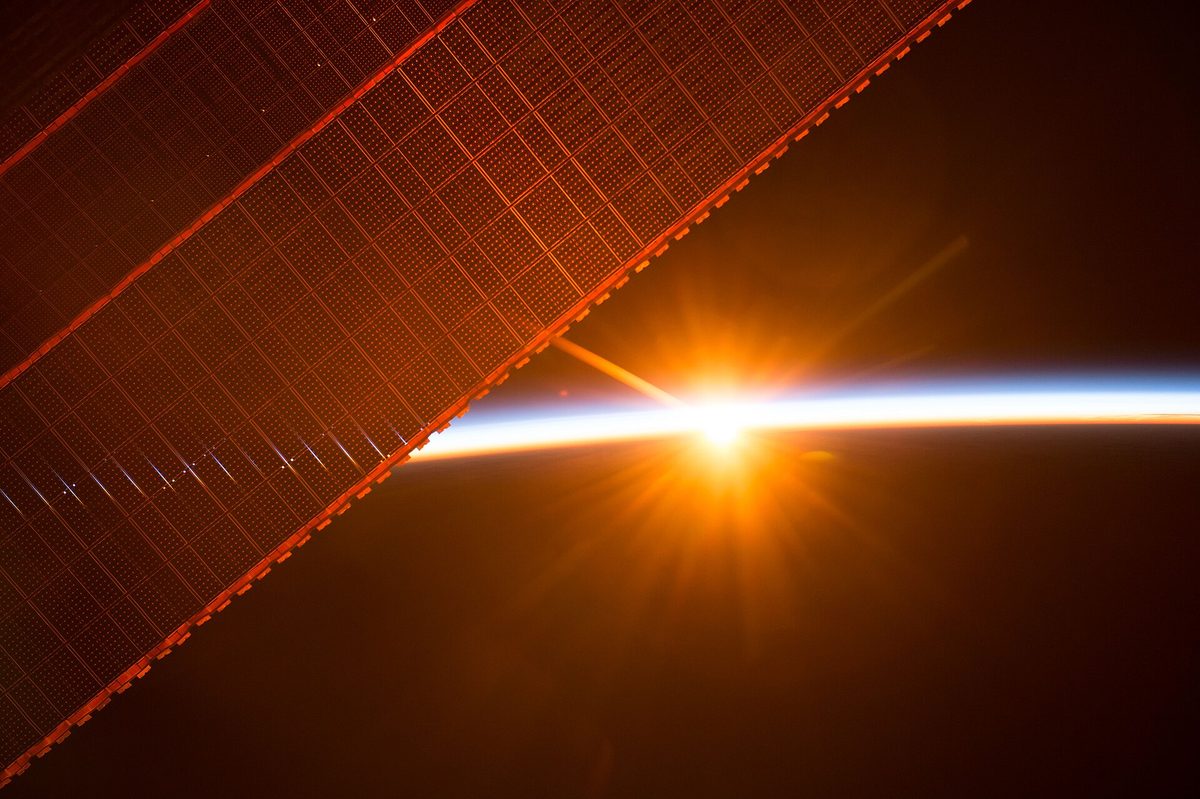
Images: cover, ISS. Sunrise Through the Solar Arrays — NASA (Public domain). In-text, Twilight Zones - 2 — Dominic Alves (CC BY 2.0).
Source: ISS Tracker ↗