How Many People Are in Space Right Now?
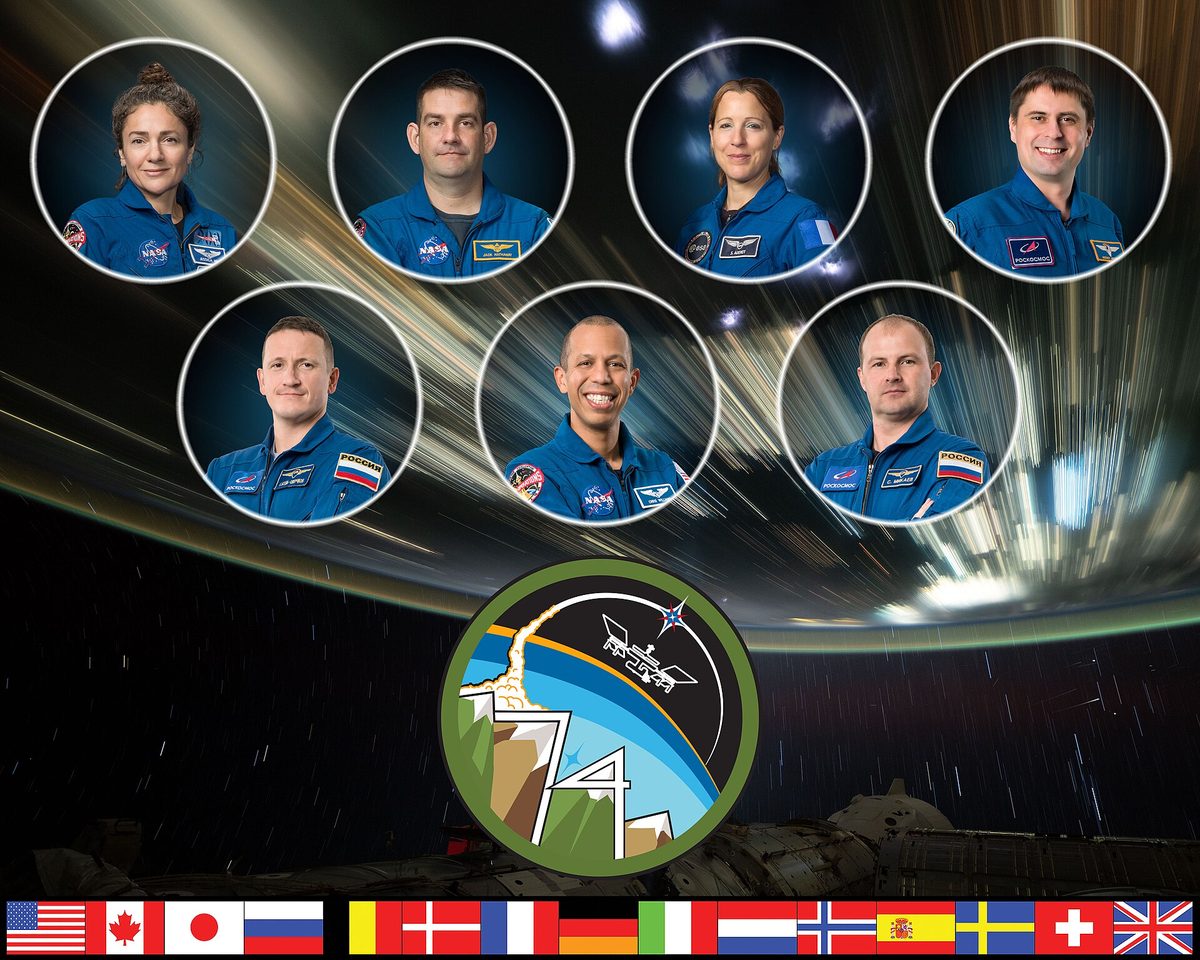
It is one of those questions you find yourself asking while gazing up at the sky: right at this moment, how many human beings are not on Earth? The answer is usually between seven and fifteen, and it changes several times a year.
The typical number
Most of the time, there are between seven and eleven people in orbit, split across two destinations: the International Space Station, with a permanent crew of six or seven, and China's Tiangong station, with three.
Added to that, on an occasional basis, are short-duration private flights and orbital tourism missions, which can push the count up for a few days.
Crucially, since November 2000, that number has never dropped to zero. There has been a continuous human presence off the planet for over two decades, an unbroken record running for thousands of consecutive days.
Why the number rises and falls
The peaks have a very specific and very human explanation: crew handovers overlap. When a new crew arrives at the ISS, the departing one does not leave right away. They stay together for five to ten days during the handover—the time needed to transfer operational knowledge of the station, hand over ongoing experiments, and share the quirks of every system.
During that window, there can be eleven or twelve people aboard the ISS, and the total in orbit can exceed fifteen. It is the best time to check the live cameras: the station is unusually crowded and buzzing with activity.
Then the departing capsule undocks, and the count returns to its baseline cruise level.
Who they are and how long they stay
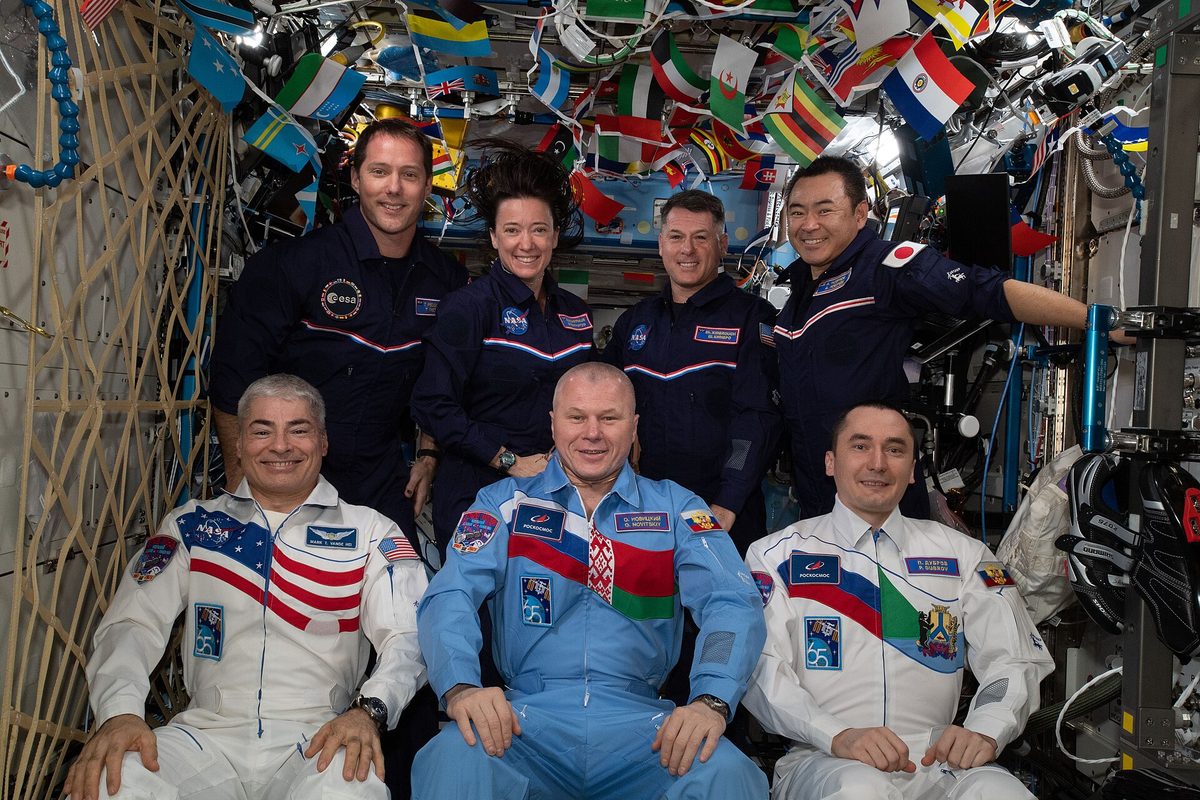
ISS crews are international by design. NASA astronauts, Russian cosmonauts, and representatives from the European, Japanese, and Canadian space agencies live and work side by side. On Tiangong, by contrast, the crew is Chinese.
Standard missions last around six months, though there are notable exceptions in both directions: extended stays of nearly a year for physiological research, and private flights lasting a week or less.
You can see who is on board right now, along with their agency and cumulative time in space, on our current crew page, and find context on how expeditions are structured in the ISS crew guide.
What they do up there
The romantic image is someone gazing out the window. The reality is a highly structured twelve-hour workday, scheduled down to the minute by teams on the ground.
- Science: the station's very reason for being. Experiments in biology, materials science, combustion, and human physiology that only make sense in microgravity.
- Maintenance: filters, pumps, water recyclers, electrical systems. A huge portion of time goes into keeping the orbiting laboratory running.
- Exercise: two mandatory hours every single day. Without it, bone and muscle loss would be debilitating upon returning to Earth.
- Extravehicular activity: spacewalks, which are far less frequent than they might seem and require months of preparation.
We detail their entire daily routine, including sleep, food, and hygiene in microgravity, in living aboard the ISS.
How they get there and how they return
Crews travel to the ISS in two types of vehicles: Russian Soyuz capsules, which have made the trip for decades, and American commercial capsules. The journey can take anywhere from around six hours to a couple of days, depending on the chosen orbital rendezvous profile.
What remains constant is that the capsule bringing a crew up stays docked for their entire stay. It serves a dual purpose: their ride back home and their emergency lifeboat if an evacuation is ever required.
Alongside crewed flights, uncrewed cargo ships arrive regularly with food, water, spare parts, and experiments. The logistics system is explained in how the ISS is resupplied.
Watching them pass overhead
What most people do not realize is that you can actually see these people, in a way, from the ground. The ISS is visible to the naked eye as an exceptionally bright white point of light crossing the sky in just a few minutes, without blinking.
Looking up at that dot knowing there are seven people inside working, eating, or sleeping completely transforms the experience. You can see where it is right now on our real-time tracker and find out when it will fly over your home with our visible pass calculator.
If you have never seen it, start with our spotting guide: with a high pass and a clear sky, you cannot miss it.
Right now, as you read this, there are people up there. And over the next few hours, chances are they will pass right over you.
Images: cover, The official portrait of the Expedition 74 crew (iss074-s-002b) — NASA/Josh Valcarcel (Public domain). Interior, Expedition 65 inflight crew portrait (1) — NASA (Public domain).
Source: ISS Tracker ↗