
Is It the ISS or an Airplane? How to Tell in Five Seconds
You head outside to watch the International Space Station, look up at the sky, and spot a bright dot moving across it. The question arises immediately: is it the ISS or an airplane? Four telltale signs can settle the debate in under ten seconds, and none require any equipment.
The definitive tell: blinking
By regulation, all aircraft carry navigation and anti-collision lights that blink or strobe. Green on the right wing, red on the left, along with flashing white or red strobes.
The ISS never blinks. What you see is sunlight reflected off its solar arrays and structure, making its brightness steady and continuous. It may slowly brighten or dim throughout the pass, but it never flashes or changes color.
If the light blinks, it's an airplane. If it's a solid, steady white light, you have a solid candidate.
The sound
The second check is even simpler: listen. An aircraft at cruising altitude can be heard on a quiet night, and at lower altitudes it's unmistakable. The ISS is 400 kilometers up: it is completely silent.
Be careful with your conclusions, though. Hearing nothing doesn't prove it's the station, as a high-altitude plane over a noisy urban area can also pass silently. But if you hear engines, it's definitely ruled out.
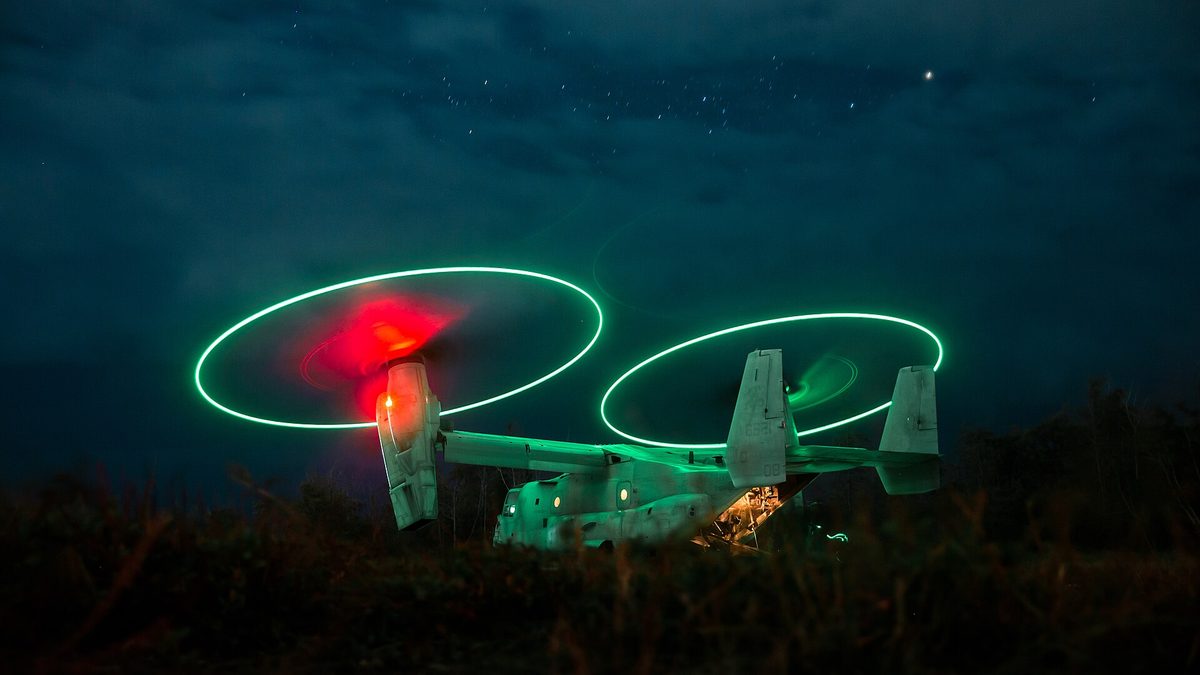
The trajectory
Objects in orbit always travel in a straight line at a constant speed. The ISS crosses the sky in a smooth, steady arc, without speeding up, slowing down, or turning.
An airplane, on the other hand, banks, turns onto airway corridors, and can trace noticeable curves when approaching an airport. And a drone does things no orbiting object ever could: hover, reverse, or drop down.
Apparent speed also helps. The ISS takes between three and six minutes to cross the entire visible sky: noticeably faster than an airliner, but far slower than a meteor, which lasts less than a second.
The end of the pass
This is the confirming tell that almost no one expects the first time. It is very common for the ISS to suddenly shut off midway across the sky without reaching the horizon, fading out over two or three seconds until it completely disappears.
It's not a glitch: it has entered Earth's shadow and no longer receives sunlight. Sometimes you can even catch an orange tint right before it vanishes, the orbital equivalent of a sunset.
No airplane does this. An aircraft flies away, its lights gradually fading into the horizon or behind clouds, but it doesn't vanish into thin air in the middle of a clear sky.
Other common mix-ups
Beyond airplanes, there are other frequent sources of confusion:
- Starlink satellite trains: multiple dots moving together in a single file, very common in the days following a launch. Unmistakable once you've seen them. Read more details in Starlink vs. the ISS.
- Standard satellites: same behavior as the ISS—straight line, no blinking—but much fainter. The station is bright enough to rival Venus; an ordinary satellite is barely brighter than a dim star.
- Reentries and debris: they leave a fragmented, glowing orange trail that breaks apart into pieces. The ISS is always a single, crisp point of light.
The foolproof method
Visual cues work wonders, but the only foolproof confirmation is cross-checking what you see with a prediction. Before heading out, check the pass time, direction of appearance, and maximum elevation using the pass schedule calculator.
If the light appears right on time, from the expected direction, and reaches the predicted elevation, it is the ISS beyond any doubt. And if it crosses at a time when no pass is scheduled, you know you're looking at something else.
Checking where the station is right now on the real-time tracker also helps you understand the pass geometry before it happens. And if it's your first time out, the spotting guide covers everything you need to know beforehand.
A bright white point, constant light, a straight line, total silence, and a sudden disappearance. Keep those five things in mind, and you will never doubt what you see again.
Images: cover, Starlink über dem Rathaus in Tübingen — Dktue (CC0). Body, MV-22 Osprey after dark — Corporal Patrick King, United States Marine Corps (Public domain).
Source: ISS Tracker ↗