New SpaceX Mission to the ISS: Solar Arrays and Skywatching Tips
Every time a cargo spacecraft launches toward the International Space Station, the night sky treats us to an extra spectacle if you know exactly where to look. NASA and SpaceX have scheduled the launch of the 35th commercial resupply services mission (CRS-35)—a flight that will not only deliver vital supplies to the orbital outpost's residents, but also a key structural upgrade to the station's power grid. If you regularly track the bright pass of the orbital laboratory over your city, this new visitor opens up a fascinating viewing window.
What happened
NASA has confirmed the operational schedule for the 35th commercial resupply services mission managed by SpaceX. The launch of the cargo Dragon capsule is scheduled from Kennedy Space Center in Florida, carrying several tons of critical supplies, cutting-edge science experiments, and technical equipment to keep the station operating at peak performance.
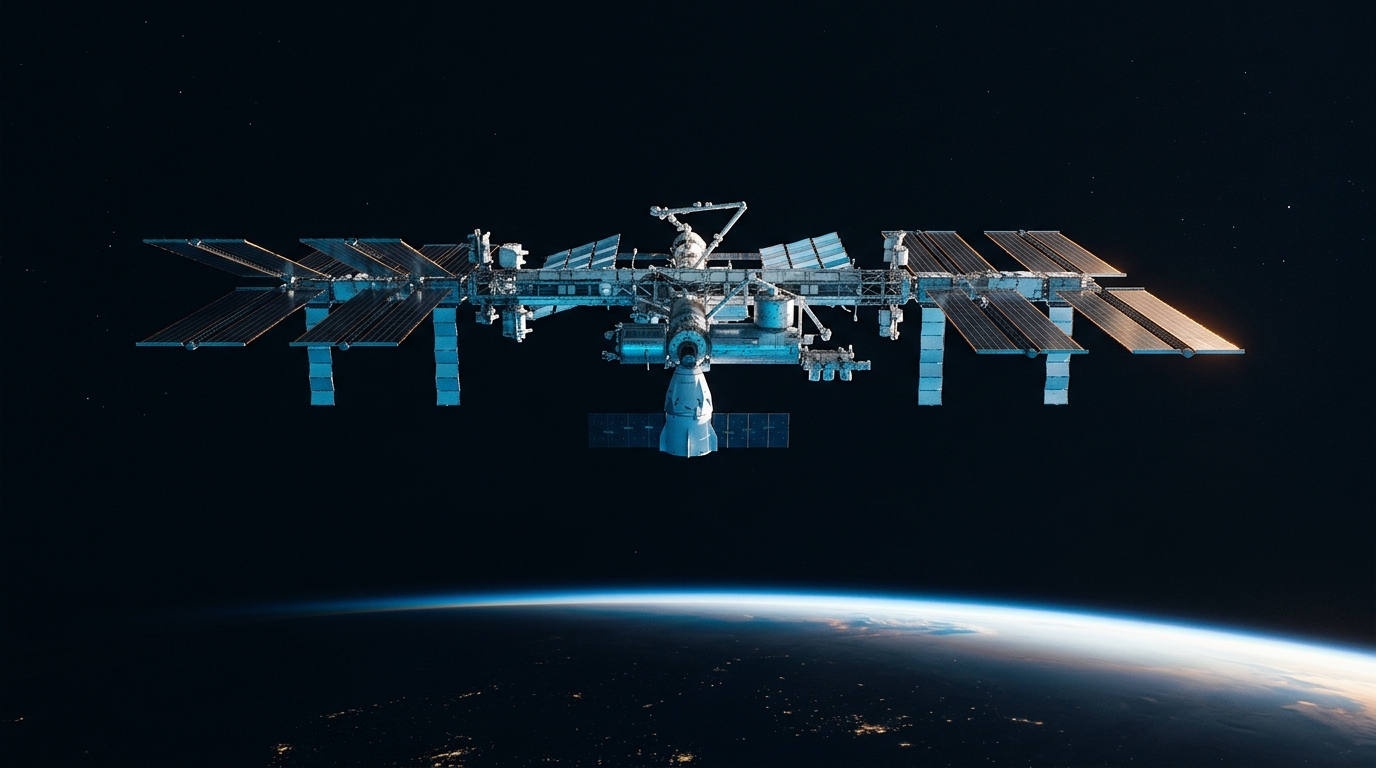
Among the most notable cargo aboard this flight is the final planned set of the station's new roll-out solar arrays, known technically as IROSAs (International Space Station Roll-Out Solar Arrays). These compact, cylindrical structures deploy over the original solar wings to bolster the ISS power grid. According to NASA, official coverage will follow both the critical launch phases and the cargo Dragon's pinpoint approach and autonomous docking to the Harmony module.
The launch comes amid a period of intense global orbital activity. Alongside U.S. operations, industry sources such as SpaceNews note that China has just completed back-to-back Long March launches to place Guowang and Yaogan constellation satellites into orbit, proving that traffic and logistical operations in low Earth orbit are experiencing their busiest period in modern space history.
Why it matters
To grasp the significance of this mission, you have to look beyond seeing it as a mere space delivery truck. First, the arrival of the final batch of IROSA arrays marks the culmination of a multi-year power modernization plan. The station's original solar wings were designed for a theoretical lifespan of fifteen years; although they remain operational, continuous bombardment by radiation, micrometeoroids, and the extreme temperature swings between orbital day and night have gradually degraded their power generation capacity. By installing these roll-out solar blankets in front of the legacy arrays, engineers restore total power to levels exceeding the station's original baseline, enabling it to power dozens of new scientific experiments and life support systems simultaneously.
Second, the human factor makes this cargo delivery especially urgent. Keeping a station fully crewed requires an uninterrupted supply chain of water, oxygen, fresh food, clean clothes, and spare parts for environmental recycling systems. According to our platform's real-time data, the ISS is currently home to a busy crew of 11 astronauts: Jessica Meir, Jessica Watkins, Joshua Kutryk, Anna Kikina, Pyotr Dubrov, Luke Delaney, Jack Hathaway, Anil Menon, Andrei Fedyaev, Sophie Adenot, and Sergey Teteryatnikov. You can explore full details on their backgrounds and technical roles in our section dedicated to the crew aboard the ISS. With eleven people breathing, conducting research, and exercising in orbit, the consumption rate of supplies accelerates significantly.
In addition, this mission showcases the maturity of the commercial cargo model. What began a decade ago as an experimental venture for SpaceX has matured into a routine yet indispensable logistical lifeline, allowing the ISS to operate as a continuous, cutting-edge laboratory without unexpected technical interruptions.
What to look for in the sky
For skywatchers tracking passes from the ground, cargo missions offer exceptional opportunities. As the Dragon capsule travels toward the space station, both objects share the same orbital plane but not the same immediate position. This sets up what observers call the "orbital chase": in the hours leading up to docking, Dragon pursues the ISS from a lower altitude to gain relative speed and catch up.
If viewing conditions and flyover timing align with your geographic location, you can witness a unique sight: two bright points of light crossing the night sky along the exact same path, separated by just a few minutes or seconds. The first and brightest will be the station; the second, fainter but visible to the naked eye or through small binoculars, will be the Dragon spacecraft chasing its target.
To calculate when you might spot these tandem passes, keep the station's current flight parameters in mind. Our tracker shows the ISS is currently flying at an average altitude of 430 km and traveling at a blistering speed of 27,568 km/h. At that speed, the station circles our planet roughly every ninety minutes, constantly dipping in and out of Earth's shadow.
To make sure you don't miss these sightings, we recommend following these basic guidelines:
- Check ahead of time what time the ISS passes over your city to find passes that coincide with evening or morning twilight, when the sky is dark but the station still catches direct sunlight.
- Familiarize yourself with tips to tell it apart from airplanes or conventional satellites by checking our practical guide to spotting the ISS from the ground: the station moves at a steady pace, without flashing red or green lights, and shines with a brightness that often outshines Jupiter.
- Pay close attention in the days right after Dragon arrives: once the IROSA panels are installed during future spacewalks, the orbital complex's reflective silhouette will shift slightly, which experienced ground-based astrophotographers can even resolve through telescopes.
Remember that you can also follow the final approach and docking maneuvers live through our live streams section, comparing exterior station camera views with the tracking position shown from Earth.
Before Dragon latches on, open our real-time tracker, see if the station passes over your home today, and head outside to watch science in motion overhead.
Source: NASA ↗