What Is the ISS and What Is It For?
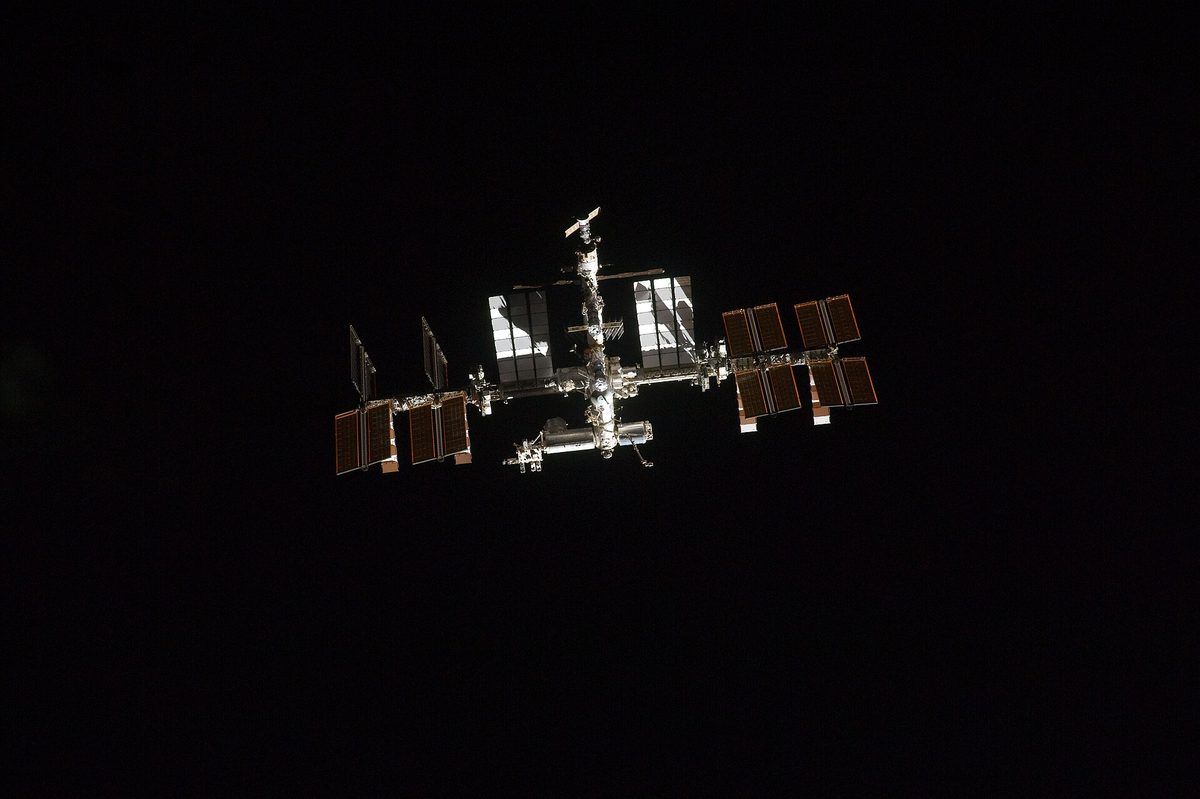
The International Space Station is the most expensive object humankind has ever built and the only permanent laboratory beyond our planet. It has been continuously inhabited since November 2000. And, by far, it is the biggest and brightest thing you can spot crossing the night sky.
What It Actually Is
It is a space station: a pressurized orbital structure capable of hosting a crew on a continuous basis. It is not a satellite in the conventional sense, because people live and work inside.
Its numbers put it into perspective: around 420 tonnes, just over a hundred meters from end to end including the solar arrays—comparable to a football field—and a living volume equivalent to a large, multi-story house, spread across interconnected modules.
It orbits about 400 kilometers high at 27,600 km/h, allowing it to complete a full lap around the planet every 92 minutes. Sixteen orbits a day. Sixteen sunrises a day for anyone on board.
Where It Came From
The first module launched in 1998, and the project grew out of merging several national space station programs that were not viable on their own. Five agencies take part: the American, Russian, European, Japanese, and Canadian space agencies.
It was assembled piece by piece over more than a decade, with dozens of flights ferrying up modules, trusses, and solar arrays to be docked in orbit. Since November 2, 2000, it has not been empty for a single day: the longest continuous human presence beyond Earth in history.
That origin also explains its shape. The ISS was not designed all at once; it was built piece by piece, which is why it looks like a sprawling modular complex rather than a sleek spacecraft.
What It Does
The short answer is that it is used to conduct experiments that are impossible on Earth, because on the ground you cannot eliminate gravity for six months straight.
- Biomedical research. In microgravity, the human body loses bone and muscle mass at an accelerated rate, a process similar to aging but compressed into months. Studying it up there provides insights into osteoporosis and muscle atrophy that are difficult to obtain any other way.
- Materials science and crystallography. Without convection or sedimentation, crystals and alloys form differently and more orderly, helping scientists understand their structure.
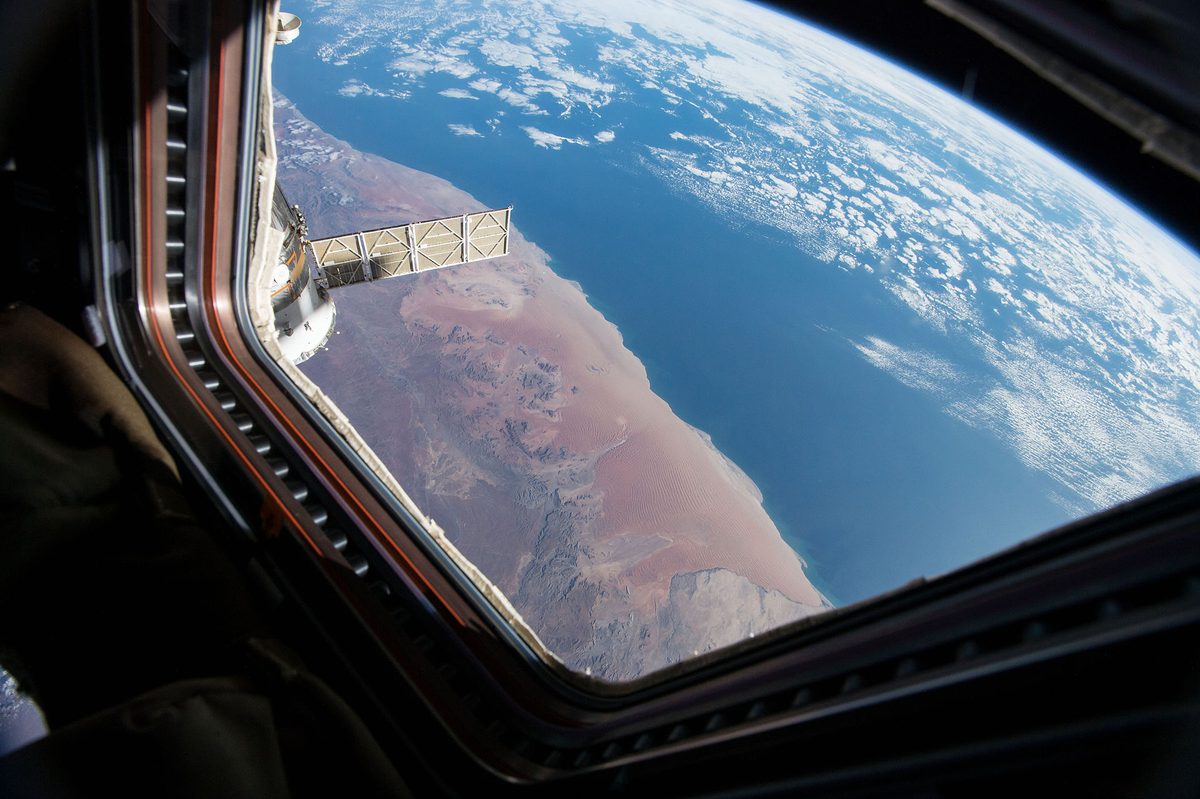
- Earth observation. Tracking glacial melt, wildfires, light pollution, and atmospheric phenomena from an orbit that covers almost all of the inhabited world.
- Testbed for exploration. Life support systems, water and air recycling, and operational procedures that will be essential for long-duration missions beyond Earth orbit.
We cover the concrete results that have already made their way back down to ground level in what the ISS has contributed to life on Earth.
Who Is on Board
The typical crew consists of six or seven people on six-month stays, representing the partner agencies. During handovers, two crews overlap for a few days, so that number can temporarily rise to eleven or twelve.
Their daily schedule is planned down to the minute: science, systems maintenance, and two mandatory hours of daily exercise, without which returning home would be physically incapacitating. You can see who is up there right now on the current crew page, and explore daily routines in life on the ISS.
How Long It Will Last
The station has an expiration date. The partner agencies have agreed to keep it operational until the end of this decade, after which it will undergo a controlled deorbit over an uninhabited area of the South Pacific.
The planned successors are commercial stations run by private operators, which in turn depend on cheap and frequent launch capabilities. The full plan and its open questions are detailed in what will happen to the ISS when it retires.
The Best Part: You Can See It from Home
This is the part most people don't know. The ISS is easily visible to the naked eye—no telescope, no binoculars required, and even from the center of a city. It appears as a very bright white point of light moving steadily across the sky in a straight line for three to six minutes, completely silent and without blinking.
All it takes is stepping outside at the right time, which is during the hours just after sunset or right before sunrise. Check when the next pass occurs over your location using the pass schedule calculator, see where it is right now on the real-time tracker, and review the spotting guide before your first attempt.
It is a 420-tonne laboratory circling the globe at 27,600 km/h. And this week, under clear skies, it is flying right over your home.
Images: cover, STS-135 ISS seen from Space Shuttle Atlantis — NASA (Public domain). Interior, ISS-43 Cupola view of the Namib Sand Sea — NASA/Scott Kelly (Public domain).
Source: ISS Tracker ↗