Cape Canaveral Record and the Accelerating Traffic Above Our Heads
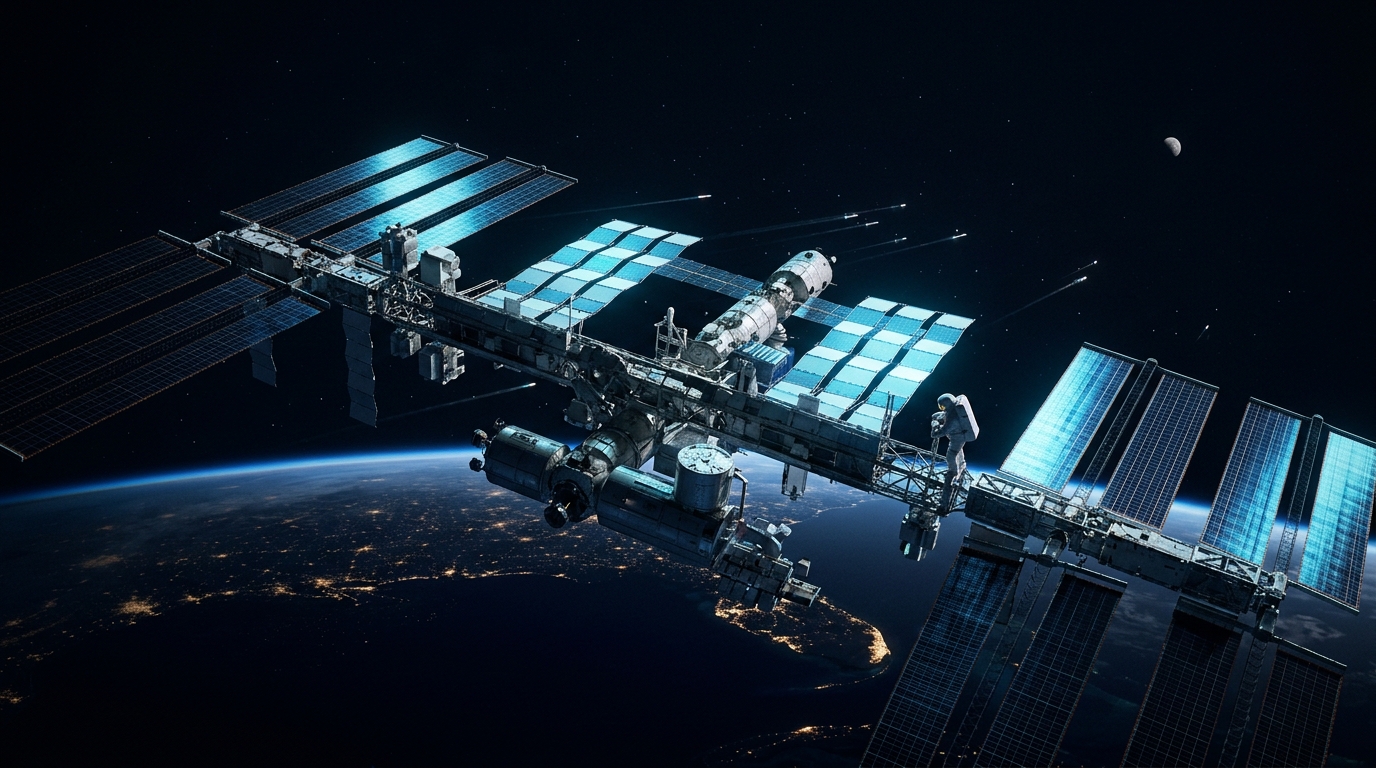
The pace of launches continues to break historic records, adding new constellations at various altitudes while the International Space Station continues its silent journey around the planet. For those of us who look up each night in search of the orbital complex's unmistakable glow, understanding what is launching and where it is headed helps us interpret a sky in constant transformation. Each new rocket leaving Earth redefines the invisible infrastructure surrounding humanity and underscores the uniqueness of the laboratory where our astronauts live.
What happened
Activity on the launch pads has reached a round milestone rich in technical significance. As reported by Spaceflight Now, SpaceX launched the final three O3b mPOWER communications satellites for SES aboard a Falcon 9 rocket. The mission not only completes a critical phase for this global connectivity network, but also marks the 400th orbital flight from historic Space Launch Complex 40 (SLC-40) at Cape Canaveral Space Force Station in Florida.
This US milestone coincides with signs of momentum in other parts of the world. Europe's aerospace ecosystem is accelerating its commercial pace this September, with firms like Isar Aerospace making decisive strides in developing and testing their own small launch vehicles, according to NASASpaceflight. Europe is thus seeking to establish sovereign alternatives for commercial access to space at a time when demand for payload capacity continues to grow.
At the same time, space exploration is delving deeper into managing accumulated knowledge. As detailed by Space.com, NASA and IBM have unveiled a new artificial intelligence model designed specifically to sift through vast amounts of lunar data. This tool aims to speed up geological analysis and planning for future surface missions, processing decades of scientific measurements in a fraction of the time required by conventional methods.
Why it matters
To understand today's space landscape, it is essential to distinguish between the different orbital regimes in which these projects operate. The newly launched O3b mPOWER satellites do not remain in low Earth orbit; instead, they travel to medium Earth orbit (MEO), roughly 8,000 kilometers above the surface. From that intermediate vantage point, they deliver high-capacity, low-latency coverage that complements both geostationary giants at 36,000 kilometers and low-orbit megaconstellations.
Reaching 400 launches from pad SLC-40 highlights the radical transformation of orbital logistics. This pad, which saw multiple generations of Titan rockets born and evolve before being adapted for the Falcon family, now sustains a launch cadence deemed impossible just a decade ago. This routine reliability is what keeps supply lines running smoothly to low Earth orbit, driving down costs not only for telecommunications, but also for cargo resupply missions to space stations.
Meanwhile, the push for commercial launchers in Europe and AI-driven analytical tools address the same underlying need: diversifying and processing space infrastructure without relying on technical monopolies. The Moon is emerging as the next major arena for sustained activity, but every step toward the cislunar environment builds on the expertise gained over a quarter of a century at humanity's only permanent outpost in the vacuum of space.
Our take
When looking at the flurry of news about commercial constellations and industrial milestones, it is worth remembering what actually translates into something visible for skywatchers. The satellites just launched toward medium Earth orbit are critical for global telecommunications, but their altitude and optical properties make them invisible to the naked eye. In contrast, the most impressive artificial object we can track from any city or town remains the International Space Station.
According to real-time data from our tracker, the ISS is currently flying at an altitude of 423 km, traveling at a staggering speed of 27,594 km/h. In that perpetual free-fall environment lives an international community rotated in roughly six-month shifts. You can check the complete profiles of everyone currently on board and their missions in our section dedicated to the current crew.
This difference in altitude explains why the observer's experience is so different. While rockets pierce the atmosphere to deploy automated technology thousands of kilometers away, the station skims across our sky just four hundred kilometers up, reflecting sunlight off its vast solar arrays with a brightness that often outshines Jupiter. If you want to check when its next pass over your horizon will occur and learn how to spot it without binoculars or a telescope, you can consult our guide to viewing the ISS and check exact flyover times at what time does the ISS pass over.
The industrialization of outer space does not detract from the fascination of watching a handful of human beings fly by at over twenty-seven thousand kilometers per hour; if anything, it highlights their achievement. In a sky increasingly populated by swarms of data and lunar algorithms, the station remains the inhabited beacon proving that space is also a place where people live and work.
To check the station's exact position right now and plan your next sighting, use our real-time ISS tracker.
Source: Spaceflight Now ↗